
Wedding Photos in Rain: A Practical Germany Guide

Updated: Jul 31
Wedding photos in rain do not require you to pretend that the weather is perfect. They require a plan that keeps people safe and comfortable, protects the schedule and leaves room for a few outdoor images when conditions allow. The goal is not to spend the whole wedding under an umbrella. It is to stop rain from controlling every decision.
In Germany, a reliable weather plan is useful in every season. Forecasts become more useful close to the date, but even then rain can arrive in short periods rather than as one continuous block. A flexible timeline and a genuinely usable indoor location are more valuable than trying to predict the exact minute the weather will change.
A real rain plan starts with the venue
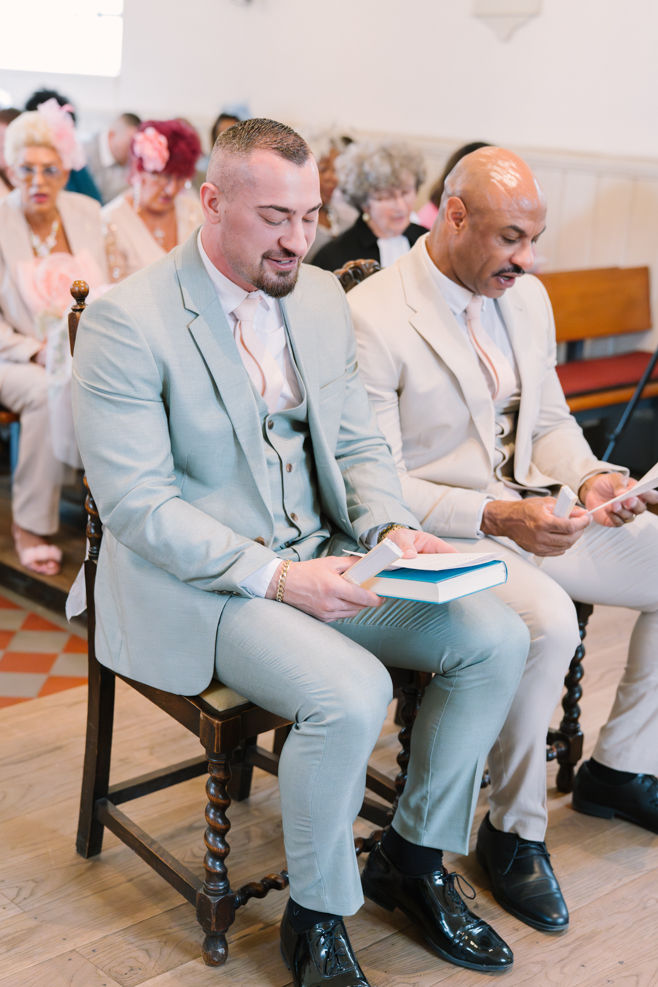
The best backup for wedding photos in bad weather is an indoor space you would be happy to use even if the rain lasts all day. It should have enough room for the ceremony, guests and basic group photos, not only a covered doorway for the couple.
During the venue visit, inspect the rain option with the same attention as the outdoor ceremony area. Look at window light, ceiling height, uncluttered walls and the distance between rooms. Check whether the covered route from the entrance to the ceremony is wide enough for guests, dresses and mobility aids. If you are still choosing coverage, my Berlin wedding photography service explains how I plan documentary coverage around changing weather, available light and real venue constraints.
Ask when the venue decides to move an outdoor ceremony inside and who has authority to make that call. A late decision can delay decoration, sound checks and guest seating. A clear decision time protects the rest of the day.
If the indoor option is visually busy, do not assume every portrait needs a grand background. A clean window, a corridor with directional light or a sheltered entrance can be enough for natural photographs. The priority is a workable space, not an elaborate indoor set.
Plan short outdoor windows instead of one long photoshoot
A rainy-day wedding timeline works better with several small opportunities than with one fixed forty-five-minute portrait block. Ten minutes after the ceremony, another ten near sunset and a brief evening portrait can produce variety without leaving you wet and cold for a long period.
This also allows the photographer to respond to the actual weather. Light rain, a dry gap and heavy wind are different conditions. The plan should be able to move without affecting dinner or speeches.
Keep the portrait locations close to the main building. A beautiful park that requires a twenty-minute drive is rarely useful during unstable weather. Covered arcades, large trees, sheltered courtyards and building entrances give you options while keeping the return route short.
My guide to choosing a wedding season in Germany explains how daylight changes across the year. Use the sunset time as a reference, but do not build the whole plan around a guaranteed golden hour.
Soft grey light can be easier than direct midday sun

Cloud cover often creates softer, more even light than an open sky at midday. Faces can be easier to photograph without strong shadows, and colours in gardens or city streets may appear more saturated after rain.
That does not mean every rainy condition is automatically attractive. Flat light, dark rooms and water on a lens still need attention. The practical advantage is that an overcast sky can provide usable portrait light in places that would be harsh in direct sun.
Rain also changes surfaces. Pavement becomes reflective, windows gather texture and artificial lights become more visible as the day darkens. These elements can support a few atmospheric images, but they should be used because they fit the scene, not because every rainy wedding needs the same umbrella photograph.
Umbrellas should protect people before they become props
Choose umbrellas that are large enough for two people and easy to open. Neutral colours usually distract less than bright logos, but function matters first. Transparent umbrellas can let in more light, while dark umbrellas can create deeper shade over faces.
Bring more than one. A second umbrella can protect clothing or help a member of the photo team move equipment. If family group photos may happen outside, guests should know in advance where to wait under cover.
Do not rely on small decorative umbrellas in strong wind. If conditions become unsafe or uncomfortable, move indoors. Rain photographs are optional; the wedding should not become an endurance test for the sake of a visual effect.
Clothing and footwear determine how relaxed the photos feel
Wet shoes, cold hands and a heavy soaked hem affect body language quickly. A practical change of shoes, warm layer and towels can make a short outdoor session much easier. For winter couple shoots or cold spring and autumn weddings, plan where coats can be removed only for the few minutes needed.
If a dress has a long train, decide whether it may touch wet ground. There is no correct answer. Some couples prefer to protect it until after the ceremony; others are comfortable using it outdoors. The photographer should follow your decision rather than pressuring you into a muddy location.
Hair and makeup may also need a small repair window. Build that into the schedule instead of trying to keep every detail untouched through wind and rain. A few minutes of preparation can help you return to the celebration without feeling rushed.
Golden hour may disappear, but the timeline still has options
Golden hour wedding photos depend on sunlight reaching the scene. Heavy cloud can remove the warm low-angle light entirely. Do not keep guests waiting or delay dinner for a sunset that is not visible.
The same time of day can still be useful because the overall light level is changing. A break in the clouds can happen quickly, and the lower sky may gain colour even when there is no direct sun. Keep a short flexible window, but set a clear limit so the schedule continues.
Blue hour portraits are another option after sunset. The sky becomes cooler while windows, candles and venue lights become more prominent. This can work well for one or two composed images, but blue hour is brief and the light falls quickly. It should be planned as a small addition, not as a replacement for all daylight portraits.
If you are comparing an indoor or outdoor setting more generally, my studio vs outdoor wedding photography guide explains the different visual and logistical trade-offs.
Group photos need a dry waiting area
Family photographs become difficult in rain mainly because many people need to be organised at once. Choose one covered assembly point and appoint someone who knows the family groups. Guests should not be called outside until the photographer is ready.
Keep the list concise. Start with the largest group, then release people as the combinations become smaller. If the available indoor background is narrow, photograph smaller groups there and save one large group for the next dry interval.
Children, older relatives and guests with limited mobility should not be asked to wait in cold or slippery conditions. Their images can happen first in the safest location. A useful group photograph matters more than a particular background.
Heavy rain, storms and slippery ground change the decision
There is a difference between light rain and unsafe weather. Strong wind, thunderstorms, poor visibility and slippery surfaces can make outdoor photography a bad decision. No image is worth exposing guests or suppliers to avoidable risk.
The venue may also restrict access to lawns, terraces or waterfront areas in bad conditions. Respect those rules. Moving barriers or entering a closed area for a photograph can damage the property and create insurance problems.
When outdoor photography is not sensible, focus on the wedding that is actually happening indoors: conversations, hands, reactions, food, speeches and movement. Documentary coverage does not depend on a sunset.
Prepare a small weather kit without overpacking
A practical wedding weather kit can stay simple:
two large umbrellas;
towels and tissues;
a change of shoes and dry socks;
a warm layer that is easy to remove;
a bag for wet items;
hairpins and a small makeup repair kit;
the venue contact and final indoor decision time.
The photographer and filmmaker are responsible for their own equipment protection. You do not need to manage their technical gear. Your preparation should focus on comfort, clothing and keeping important people moving smoothly.
The existing wedding photoshoot preparation guide covers clothing and feeling natural in front of the camera. Add the weather kit only when the forecast makes it relevant.
Frequently asked questions about rainy wedding photos
Can wedding photos still look natural in rain?
Yes. Natural photographs come from comfortable movement and real interaction, not from clear weather. Use short outdoor sessions, a nearby sheltered location and an indoor plan that does not feel like a compromise.
Should we buy transparent umbrellas?
They can be useful because they allow more light around faces, but size and stability matter more. Avoid prominent logos and bring at least one backup.
What if it rains during the entire portrait time?
Move the main portraits indoors and keep a short flexible opportunity later. Do not delay the whole reception waiting for a dry period that may not arrive.
Are overcast wedding photos dull?
Not necessarily. Overcast light is often soft and even. Colour, composition, background and interaction matter more than whether the sky is blue.
Is rain on a wedding day a problem for photography?
Rain changes the locations and timing, but it does not prevent a complete wedding gallery. The important questions are whether the venue has a usable indoor backup, whether groups can wait under cover and whether the schedule includes short flexible portrait windows.
Should we schedule a separate after-wedding shoot?
Only if outdoor portraits are a high priority and the wedding-day conditions make them impossible. It is an additional session, not a requirement for a complete wedding gallery.
Plan for rain, then return attention to the wedding
Wedding photos in rain work best when the practical decisions are made before the forecast becomes stressful. Choose a venue with a real indoor option, keep portrait locations close, prepare clothing and umbrellas, and protect several short time windows instead of one rigid shoot.
Once that plan exists, the weather becomes one condition among many. The photographs can follow the day rather than forcing the day to follow the weather.
Tung is the photographer and filmmaker behind Maii Studio. He is Vietnamese, has lived in Germany for around ten years and works in English, German and Vietnamese. Based in Magdeburg and expanding his focus to Berlin, he documents weddings across Germany in an unposed, honest and timeless style. His approach to [Berlin wedding photography](https://www.maii.studio/wedding-photographer-berlin) keeps the timeline practical and the coverage close to what is genuinely happening.


Comments